La Roche-Posay Effaclar Purifying Foaming Gel vs CeraVe Hydrating Cleanser: Which Face Wash Is Better for Oily, Dry & Sensitive Skin?
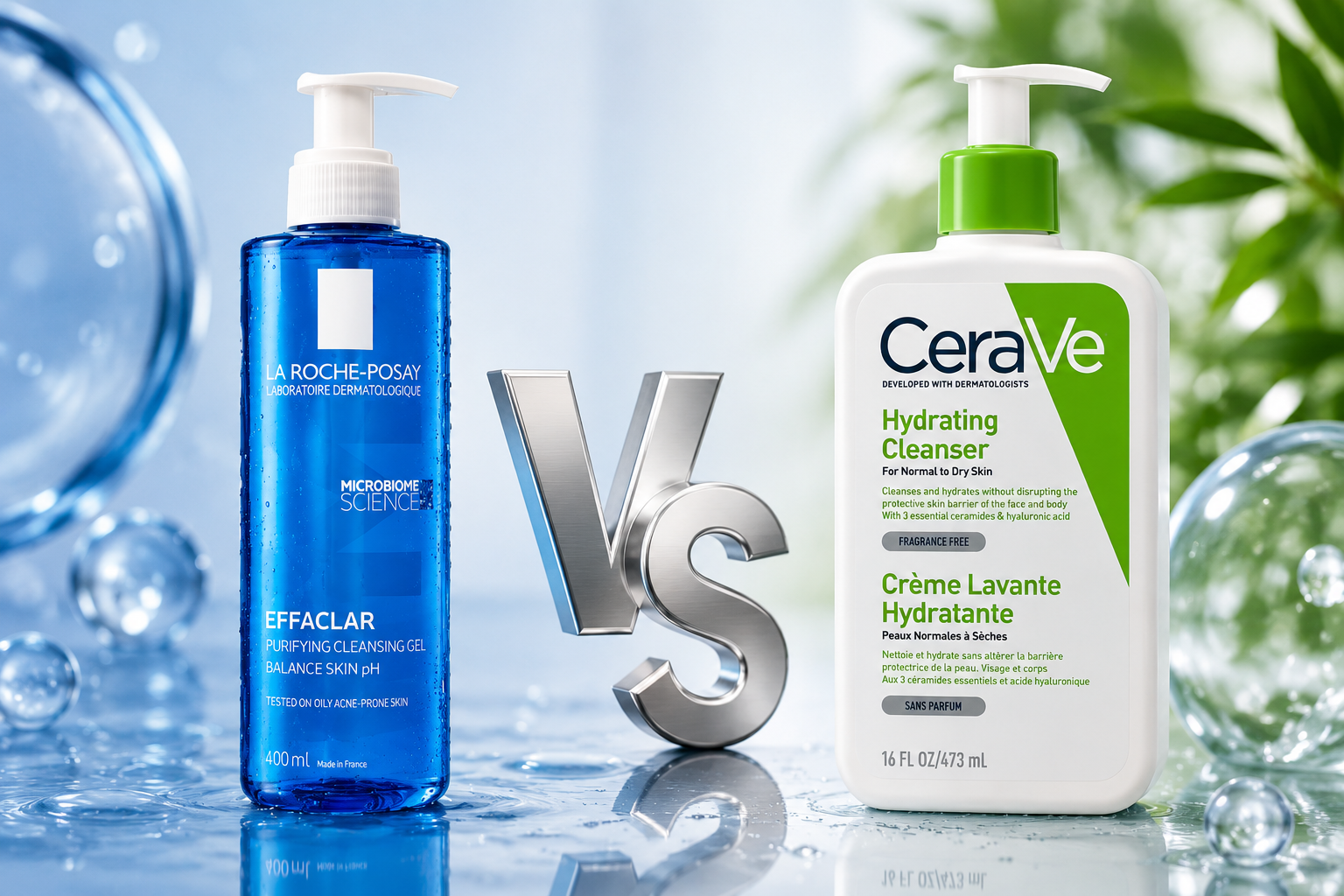
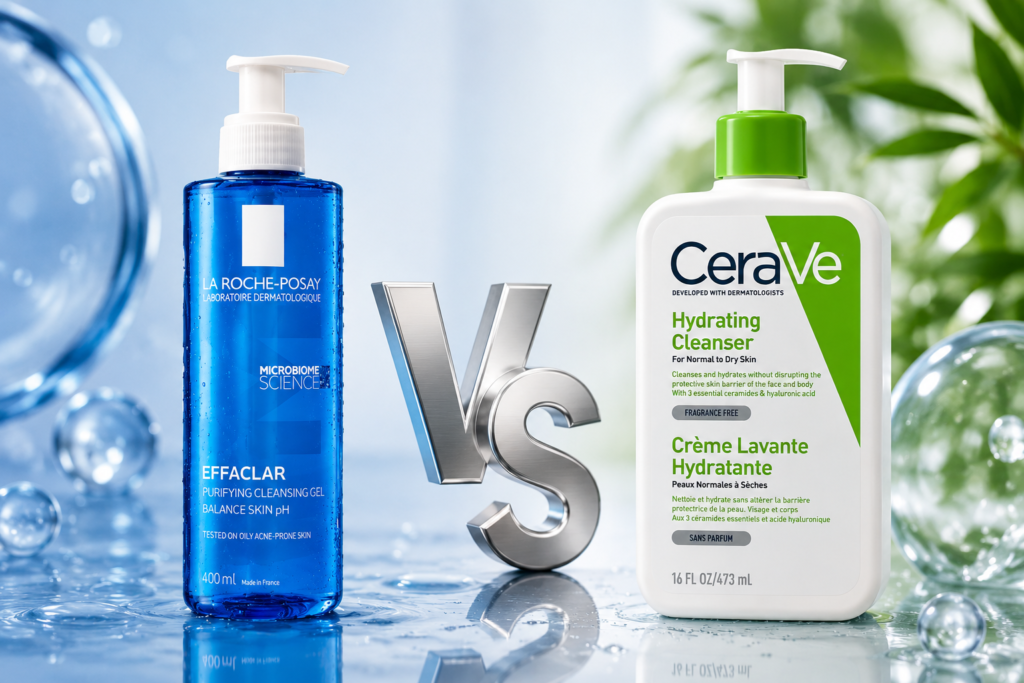
These two cleansers are popular for completely different reasons. La Roche-Posay Effaclar Purifying Foaming Gel is designed for oily, combination and blemish-prone skin, while CeraVe Hydrating Cleanser is a gentle, non-foaming option for normal, dry and sensitive skin.
This comparison will help you choose the better cleanser for acne, excess oil, dryness, sensitivity, tightness and everyday use.
⚡ Quick Answer
Choose La Roche-Posay Effaclar Purifying Foaming Gel if your skin is oily, shiny or blemish-prone and you want a fresh foaming cleanser that removes excess sebum.
Choose CeraVe Hydrating Cleanser if your skin is normal to dry, sensitive or easily stripped and you want a gentle cleanser that supports moisture and barrier comfort.
The simplest difference: Effaclar is the better match for oil and shine. CeraVe is the better match for dryness, sensitivity and barrier support.
🏆 Quick Comparison Table
| Category | Best Choice | Why |
|---|---|---|
| Oily Skin | 🏆 Effaclar Gel | Better suited to excess sebum, shine and oily skin |
| Dry Skin | 💧 CeraVe Hydrating Cleanser | Non-foaming formula designed to cleanse without leaving skin tight |
| Blemish-Prone Skin | 🔥 Effaclar Gel | Formulated specifically for oily and blemish-prone complexions |
| Sensitive Skin | 🌿 CeraVe Hydrating Cleanser | Gentler, cream-like cleansing with no foaming effect |
| Excess Shine | ✨ Effaclar Gel | Zinc PCA supports a fresher, less oily skin feel |
| Barrier Support | 🧱 CeraVe Hydrating Cleanser | Contains ceramides and hyaluronic acid to support moisture retention |
| Foaming Experience | 🫧 Effaclar Gel | Creates a fresh foam that oily skin users may prefer |
| Use with Retinol or Acids | 💧 CeraVe Hydrating Cleanser | Reduces the risk of making an active-heavy routine feel overly stripping |
| Best Overall | ⭐ Depends on Skin Type | Effaclar for oily skin; CeraVe for dry or sensitive skin |
🧼 La Roche-Posay Effaclar Purifying Foaming Gel
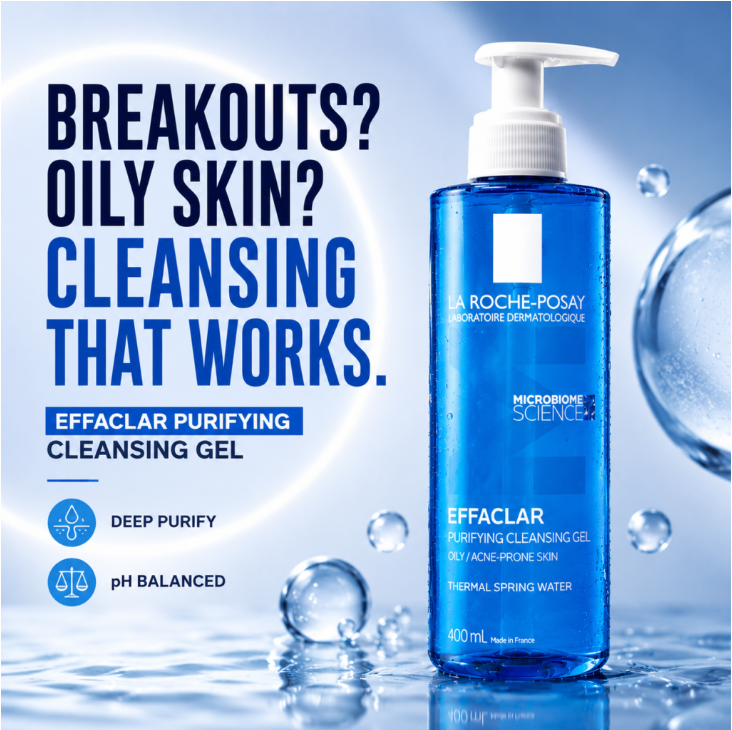
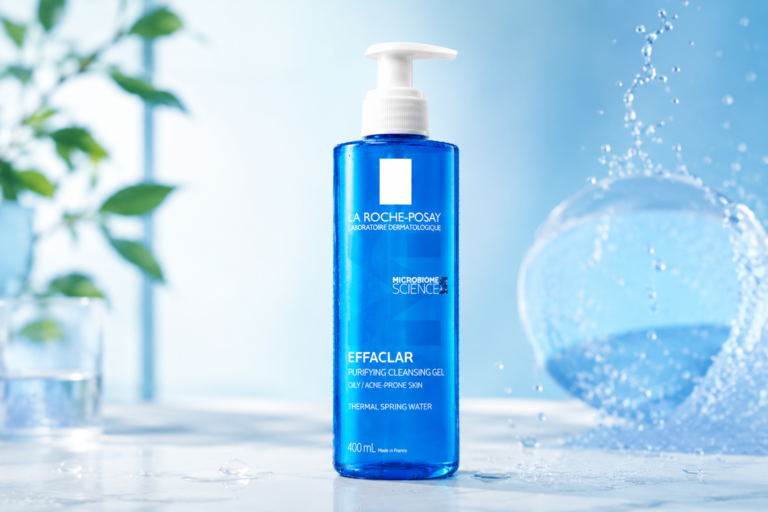
La Roche-Posay Effaclar Purifying Foaming Gel is made for oily, combination and blemish-prone skin. It uses a fresh foaming gel texture to remove dirt, excess oil and daily buildup while helping the skin feel cleaner and less shiny.
The official formula highlights ingredients including Zinc PCA, La Roche-Posay Thermal Spring Water, citric acid and Phylobioma. The product is positioned as a purifying daily cleanser rather than an exfoliating acne treatment. :contentReference[oaicite:0]{index=0}
✅ Best For
- Oily and combination skin
- Excess sebum and shine
- Blemish-prone complexions
- People who prefer foaming cleansers
- Hot or humid weather
- Simple daily acne routines
⚠️ Not Ideal If
- Your skin is dry or flaky
- Your face feels tight after foaming cleansers
- Your barrier is already irritated
- You use several drying acne treatments
- You expect a cleanser alone to clear acne
Pros
- Fresh foaming texture
- Good fit for oily skin
- Helps remove excess sebum
- Easy to use morning or evening
- Works well before a leave-on acne treatment
Cons
- May feel too cleansing for dry skin
- Does not replace a targeted acne serum
- Foaming texture may not suit a weakened barrier
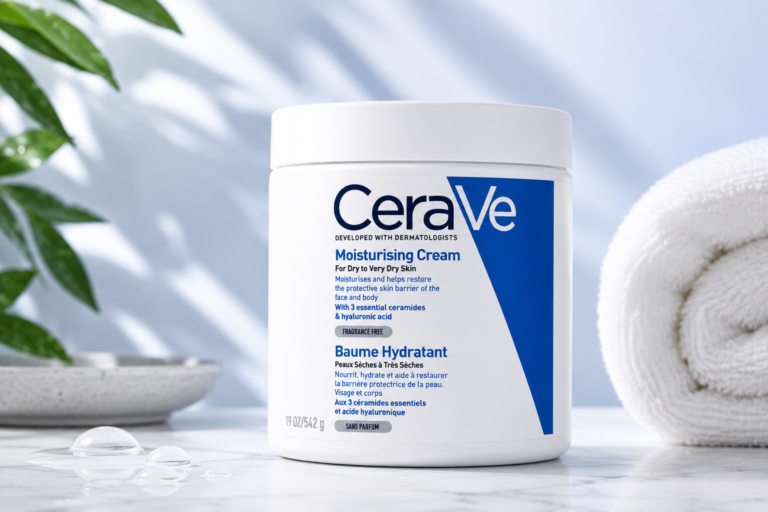
💧 CeraVe Hydrating Cleanser
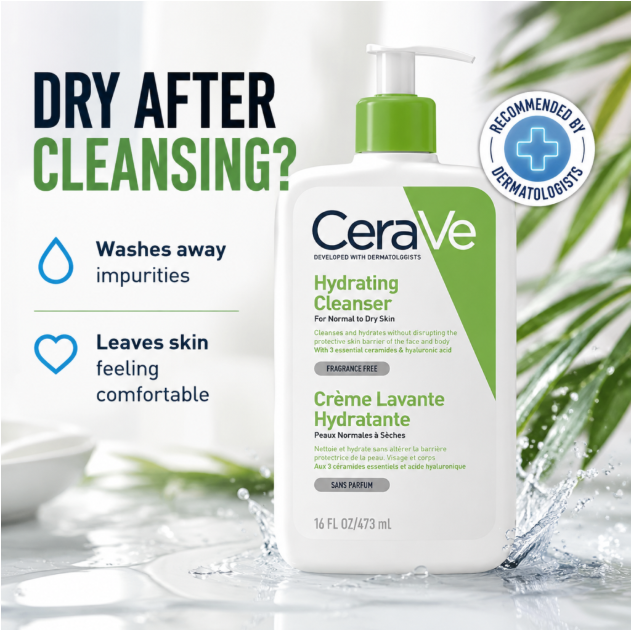
CeraVe Hydrating Cleanser is the gentler, moisture-preserving option. Its creamy, non-foaming formula is designed for normal to dry skin and cleanses without leaving the face feeling stripped, tight or uncomfortable.
The formula contains three essential ceramides and hyaluronic acid to help maintain the skin’s natural barrier and support moisture retention. CeraVe positions it for normal to dry skin, including sensitive skin that benefits from a softer cleansing experience. :contentReference[oaicite:1]{index=1}
✅ Best For
- Normal to dry skin
- Sensitive or reactive skin
- Tightness after cleansing
- Barrier-focused routines
- People using retinol or exfoliating acids
- Cold weather and dry environments
⚠️ Not Ideal If
- You want a rich foaming experience
- Your skin is extremely oily
- You expect a deep-clean feeling
- You want an active acne cleanser
- You prefer a very fresh gel texture
Pros
- Gentle, non-foaming formula
- Contains ceramides and hyaluronic acid
- Comfortable for dry and sensitive skin
- Works well in active-heavy routines
- Can be used on the face and body
Cons
- May feel too mild for very oily skin
- Does not specifically target blackheads or acne
- Some users may miss a foaming, freshly washed feeling
🔬 Effaclar Gel vs CeraVe Hydrating Cleanser: The Main Difference
Effaclar Purifying Foaming Gel focuses on removing excess oil and keeping oily, blemish-prone skin feeling fresh.
CeraVe Hydrating Cleanser focuses on gentle cleansing, moisture preservation and barrier comfort.
The real question is simple: does your skin produce too much oil, or does cleansing leave it dry and tight?
🧪 Formula Focus
Effaclar Purifying Foaming Gel
- Zinc PCA: supports a purified, less oily skin feel
- Thermal Spring Water: part of La Roche-Posay’s sensitive-skin positioning
- Phylobioma: featured in the updated microbiome-focused formula
- Foaming cleansing base: removes oil and daily impurities
CeraVe Hydrating Cleanser
- Three essential ceramides: help support the skin barrier
- Hyaluronic acid: helps retain moisture
- Non-foaming base: reduces the stripped feeling after washing
- Fragrance-free positioning: useful for many sensitive-skin routines
🧴 Texture & Cleansing Experience
Effaclar Texture
A clear gel that develops into a refreshing foam. It rinses easily and gives oily skin a cleaner, fresher finish.
CeraVe Texture
A creamy, lotion-like cleanser that produces little to no foam. It leaves the skin soft and comfortable rather than squeaky clean.
🌿 Which Is Better for Oily and Acne-Prone Skin?
La Roche-Posay Effaclar Purifying Foaming Gel has the advantage.
It is specifically formulated for oily and blemish-prone skin and does a better job of removing excess sebum and reducing the heavy, greasy feeling that can develop during the day. :contentReference[oaicite:2]{index=2}
However, acne-prone skin is not always oily. If acne treatments have made the skin dry, flaky or irritated, CeraVe Hydrating Cleanser may be the more sensible supporting cleanser.
💧 Which Is Better for Dry or Sensitive Skin?
CeraVe Hydrating Cleanser is the clear winner.
Its non-foaming texture and combination of ceramides and hyaluronic acid make it more suitable when the skin becomes tight or uncomfortable after cleansing. :contentReference[oaicite:3]{index=3}
Effaclar may still suit some sensitive oily skin types, but a dry or weakened barrier is more likely to appreciate the gentler CeraVe formula.
🧼 Which Removes Sunscreen and Makeup Better?
Neither product is the ideal first step for heavy waterproof makeup.
Effaclar may feel more effective at removing light sunscreen, oil and daily buildup because of its foaming texture. CeraVe Hydrating Cleanser is gentler but may need to be used after a cleansing balm or micellar water when makeup is heavy.
For water-resistant sunscreen or long-wear foundation, consider a first cleanse followed by either face wash.
🌙 Which Is Better with Retinol, BHA or Acne Treatments?
CeraVe Hydrating Cleanser is often the safer companion.
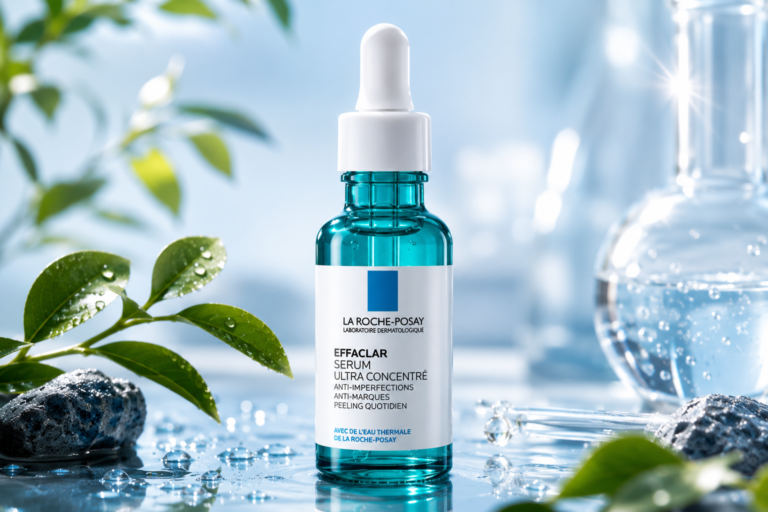
If your routine already contains retinol, retinal, salicylic acid, Effaclar Serum, benzoyl peroxide or prescription acne treatment, adding a very purifying cleanser may increase tightness and dryness.
Effaclar Gel makes more sense when the rest of the routine is simple and the skin remains genuinely oily and comfortable.
☀️ Can You Use Them Morning and Night?
Both can be used daily, but twice-daily cleansing is not necessary for every skin type.
Oily skin may enjoy Effaclar morning and evening. Dry or sensitive skin may prefer CeraVe at night and a water rinse in the morning.
Reduce cleansing frequency or switch to the gentler option if the skin begins to sting, peel or feel unusually tight.
👤 Who Should Buy Which Cleanser?
Buy La Roche-Posay Effaclar Purifying Foaming Gel if:
- Your skin becomes oily quickly
- You struggle with excess shine
- Your skin is combination or blemish-prone
- You enjoy foaming cleansers
- Your current routine is not overly drying
Buy CeraVe Hydrating Cleanser if:
- Your skin is normal, dry or sensitive
- Your face feels tight after washing
- You use retinol, acids or acne medication
- Your skin barrier needs support
- You prefer creamy, non-foaming cleansers
👩⚕️ Pharmacist’s Perspective
These cleansers are not direct substitutes for the same skin type. Their value comes from how clearly they serve opposite needs.
Effaclar Purifying Foaming Gel is the more logical recommendation for someone with persistent oiliness, shine and a blemish-prone complexion that still feels comfortable after cleansing.
CeraVe Hydrating Cleanser makes more sense when dryness, sensitivity, tightness or barrier disruption are the dominant concerns.
The common mistake is choosing Effaclar simply because a few blemishes are present. Acne-prone skin can also be dehydrated and irritated. In that situation, a gentler cleanser may support the routine better than a stronger cleansing sensation.
🏁 Final Verdict
Choose La Roche-Posay Effaclar Purifying Foaming Gel if:
- Your skin is oily or combination
- You want help removing excess sebum
- You prefer a fresh foaming texture
- Your complexion is blemish-prone
- Your skin does not feel dry after cleansing
Choose CeraVe Hydrating Cleanser if:
- Your skin is normal, dry or sensitive
- Your face feels tight after washing
- You want barrier-supporting ingredients
- You use strong active treatments
- You prefer a gentle non-foaming cleanser
🧼 Best for Oily Skin, Shine & Blemish-Prone Complexions: La Roche-Posay Effaclar Purifying Foaming Gel
💧 Best for Dry, Sensitive & Barrier-Stressed Skin: CeraVe Hydrating Cleanser