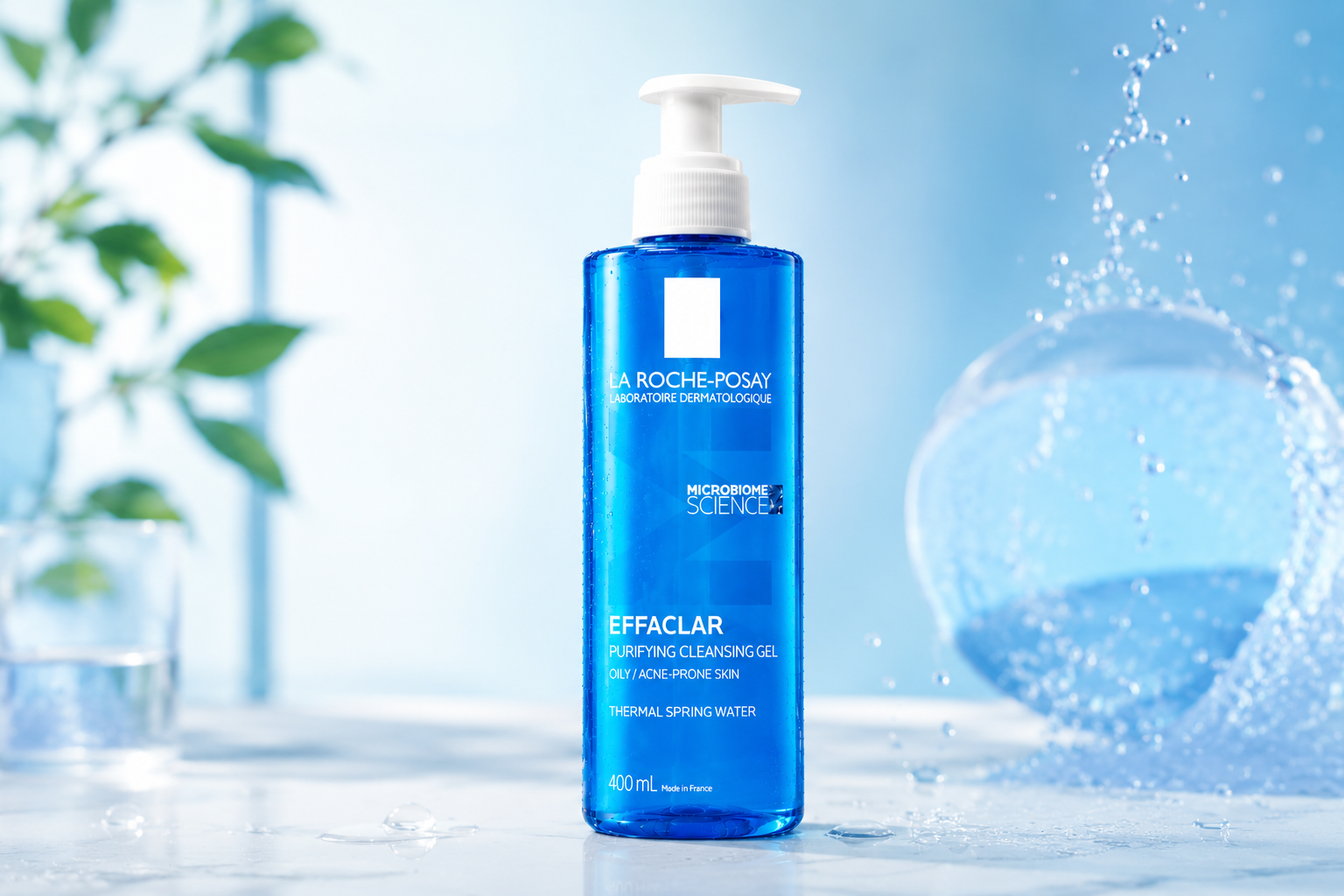
La Roche-Posay Effaclar Gel Review: Is This the Best Cleanser for Acne-Prone Skin?
An expert pharmacist’s breakdown of the cult-favorite Effaclar Purifying Foaming Gel. Does it really clear imperfections while respecting your skin barrier?
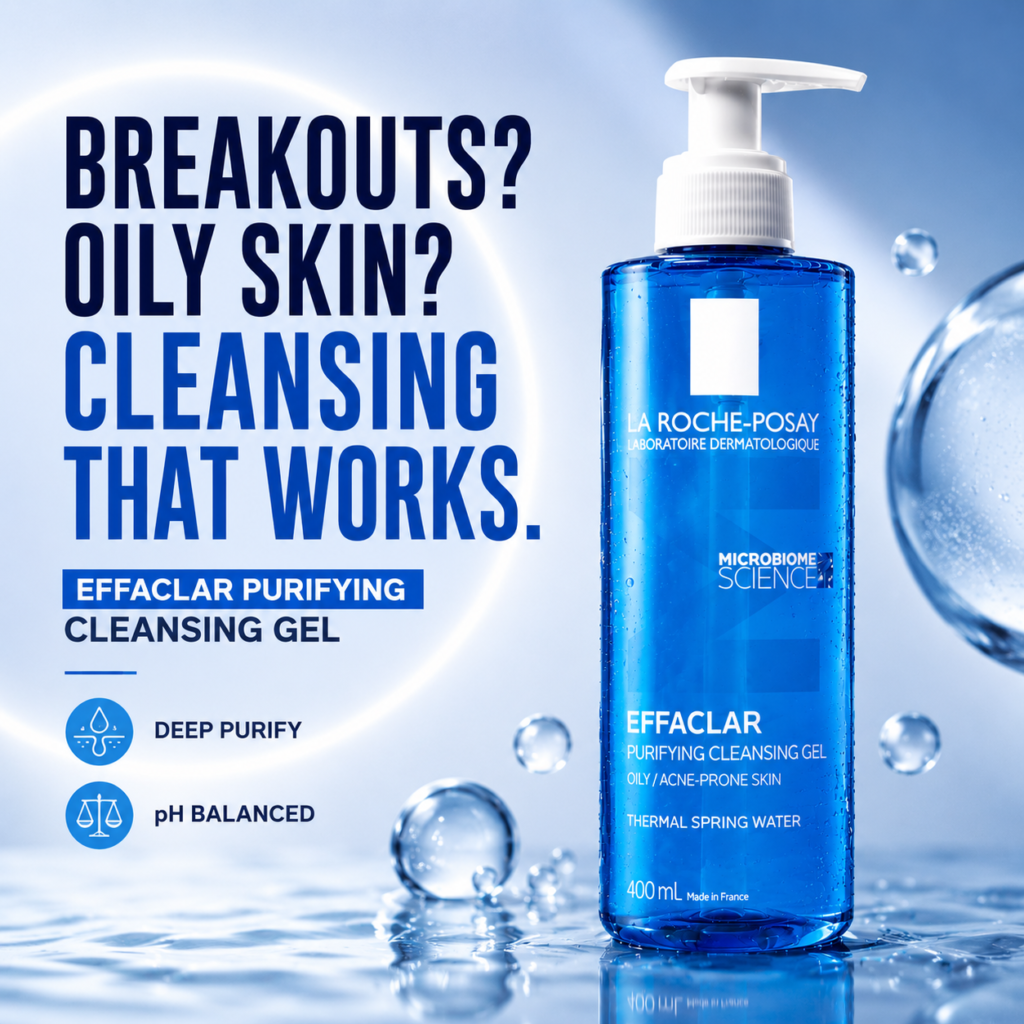
La Roche-Posay Effaclar Gel
🛒
🎯 Best For
- ✅ Oily and acne-prone skin types[cite: 1]
- ✅ Sensitive skin requiring gentle purification[cite: 1]
- ✅ Controlling excess sebum and shine[cite: 1]
🚫 Skip If
- ❌ You suffer from chronic dry or dehydrated skin
- ❌ You have a known sensitivity to fragrances
🧪 The Science Behind the Formula
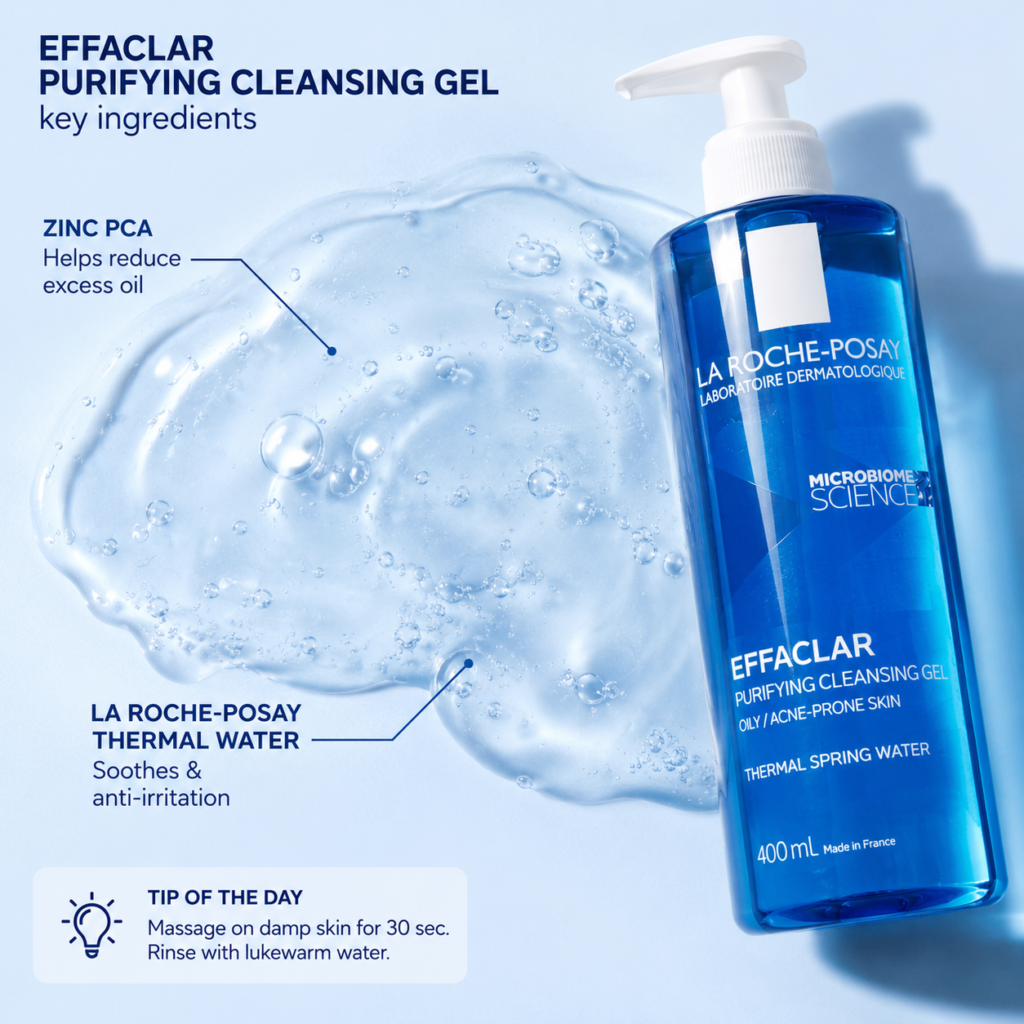
La Roche-Posay has integrated Microbiome Science into the Effaclar formula to target the specific causes of acne-related imperfections[cite: 1]. By stabilizing the skin’s pH level[cite: 1], the gel effectively removes impurities and excess oil without triggering the reactive sebum production often seen with harsher surfactants. It is engineered to maintain skin balance, making it a reliable staple in dermatological skincare[cite: 1].
☁️ Texture & Pharmacist’s Tip
The texture is a clear, refreshing gel that lathers into a dense, non-stripping foam. Pro Tip: Always use lukewarm water. Hot water can further stimulate oil glands, while lukewarm water ensures the gel cleanses effectively without compromising your skin barrier.
✅ Pros
- Maintains optimal skin pH[cite: 1]
- Non-drying, comfortable finish[cite: 1]
- Scientifically backed for acne-prone skin[cite: 1]
⚠️ Cons
- Contains fragrance
- Requires daily consistency for maintenance
👨⚕️ Pharmacist’s Perspective
“As a pharmacist, I often see patients struggling with overly aggressive cleansers that damage their skin barrier. The Effaclar Gel stands out because it treats the symptom—excess oil—without the ‘stripped’ feeling. It’s an essential foundation for any effective anti-acne regimen[cite: 1].”
Clinical Verdict
Efficacy: A gold-standard cleanser for oily skin. If you are serious about managing acne and maintaining a healthy microbiome, this product is worth the investment.