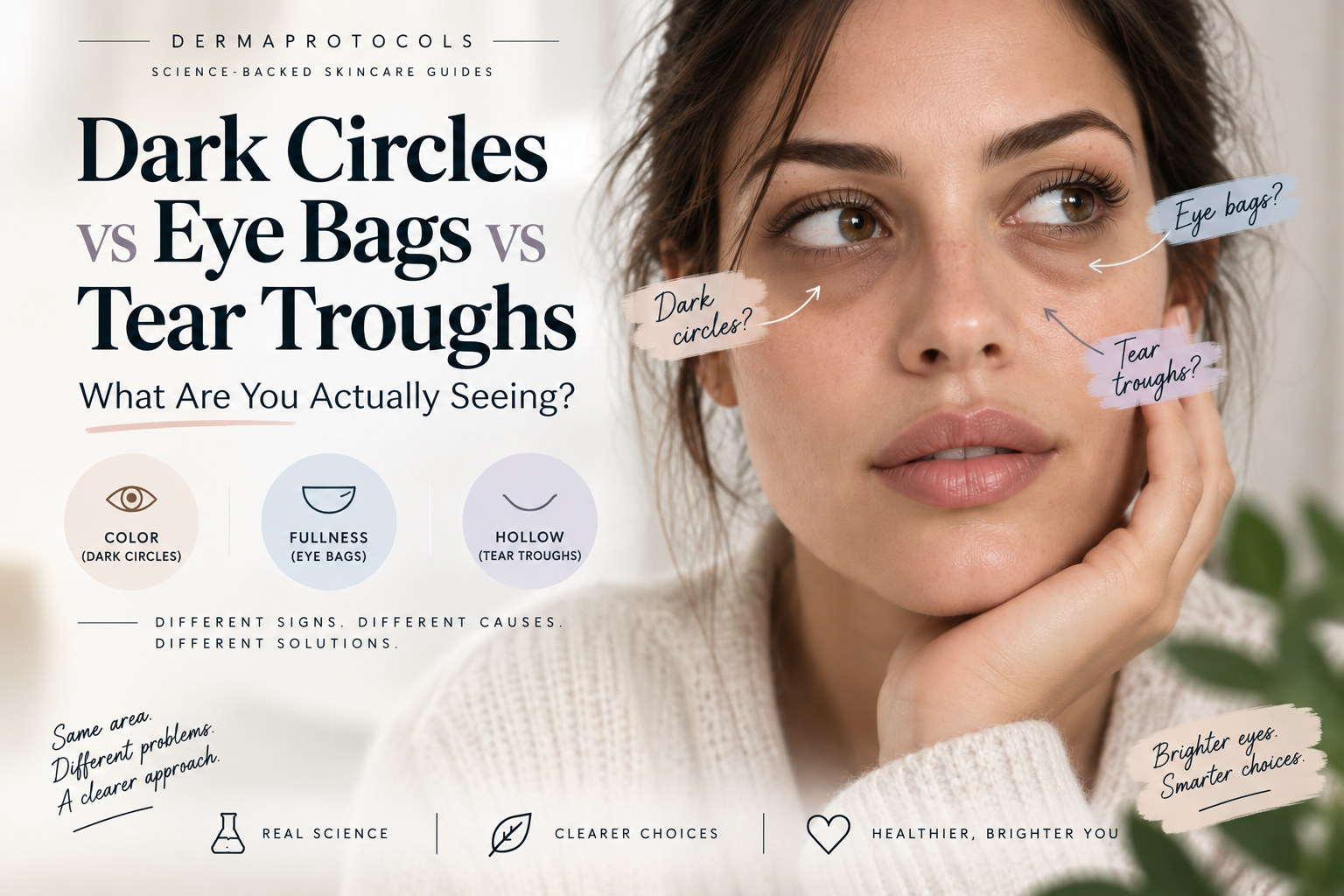
Dark Circles vs Eye Bags vs Tear Troughs: What Are You Actually Seeing?
You call everything under your eyes “dark circles.”
Your mirror may be showing you three completely different things.
Sometimes it is color. Sometimes it is puffiness. Sometimes it is anatomy creating a shadow.
And sometimes, annoyingly, it is all three.
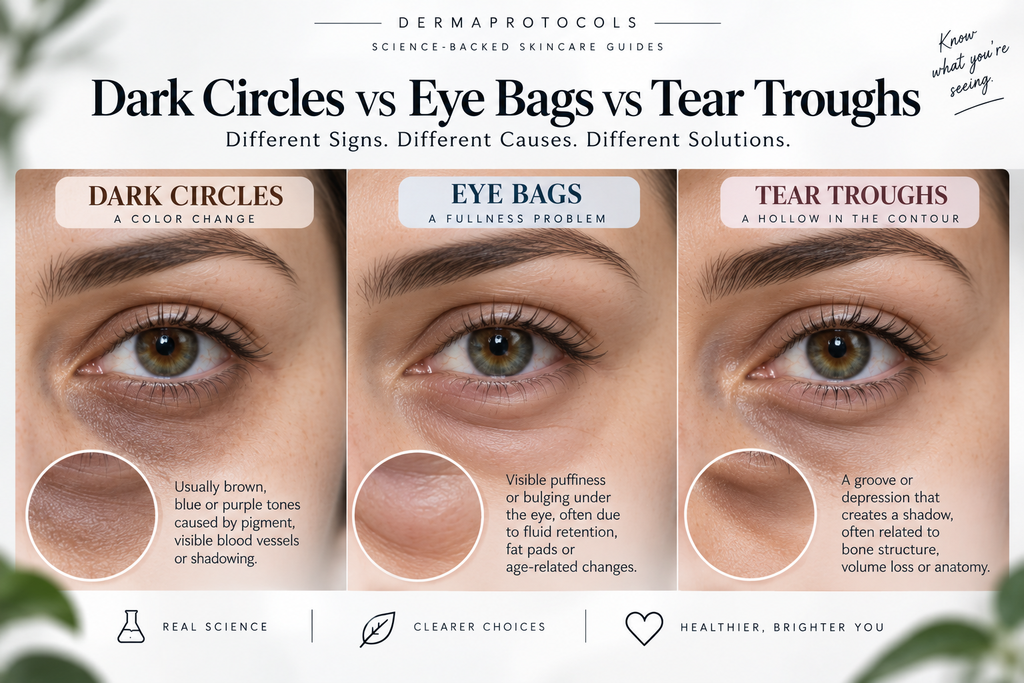
THE 15-SECOND DIFFERENCE
🟤 Dark circles
Think mainly color — pigment, visible vessels or shadowing.
🫧 Eye bags
Think mainly fullness or puffiness under the eye.
🌑 Tear troughs
Think mainly hollowing — a structural depression that can create a shadow.
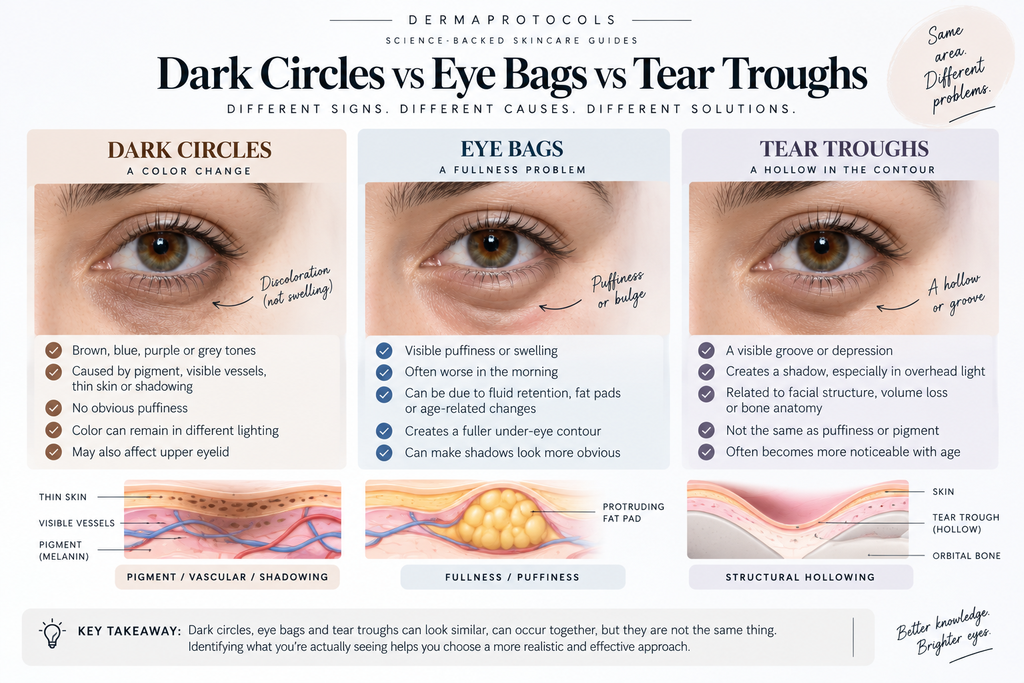
🟤 Dark Circles = The Color Problem
“Dark circles” describes the appearance of darkness under the eyes.
That darkness can come from several different sources, including pigmentation, thin translucent skin, visible vascular structures and shadowing from local anatomy.
So even within the category of dark circles, the cause may differ.
THINK DARK CIRCLES WHEN:
✓ Brown, grey, blue or purple color is obvious
✓ The area looks darker even without obvious swelling
✓ Pigment or visible vessels may be contributing
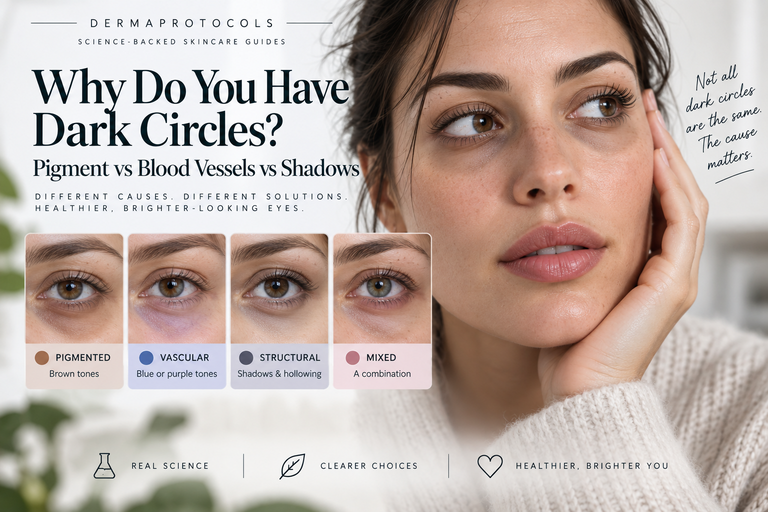
If you want the deeper breakdown of pigmented vs vascular vs structural dark circles, read our full guide: Why Do You Have Dark Circles? Pigment vs Blood Vessels vs Shadows.
🫧 Eye Bags = The Fullness Problem
Eye bags are different.
Here, the main issue is bulging, swelling or puffiness beneath the eye.
That fullness may be temporary — for example morning puffiness — or it may be more structural. Infraorbital fat prominence and age-related changes can also alter the lower-eyelid contour.
THINK EYE BAGS WHEN:
✓ You see visible puffiness or a bulge
✓ It may look worse in the morning
✓ Light creates a shadow underneath the fullness
✓ The problem looks more like “volume” than discoloration
For temporary puffiness, a targeted product may make more sense than a pigment serum. Our The Ordinary Caffeine Solution 5% + EGCG Review focuses specifically on morning puffiness and tired-looking eyes rather than pretending caffeine can erase deep hollows or pigmentation.
🌑 Tear Troughs = The Hollow Problem
A tear trough is a groove or depression that runs from the inner corner of the eye toward the upper cheek.
When that hollow catches overhead light, it can create a strong shadow that looks exactly like a dark circle.
But a shadow is not the same thing as pigment.
THINK TEAR TROUGH WHEN:
✓ You see a clear hollow or groove
✓ Darkness changes a lot with lighting
✓ Front lighting makes it look better
✓ Overhead lighting makes it look dramatically darker
Clinical assessment of the tear trough considers much more than the groove itself, including cheek volume, orbital anatomy, skin quality and pigmentation. :
🔀 Can You Have All Three?
Absolutely.
Someone may have a little brown pigmentation, some morning puffiness and a visible tear trough.
And this is where skincare advice gets messy.
One cream is asked to brighten pigment, shrink puffiness, thicken skin and erase a structural hollow.
That is a lot to ask from one tiny tube.
💡 THE LIGHTING CHECK
Change the Light Before You Change Your Routine
Look at your under-eye area in soft frontal daylight.
Then stand under overhead lighting.
If the darkness changes dramatically:
shadowing may be playing a major role.
If the color stays fairly consistent:
pigment or vascular visibility may be contributing more.
Useful clue? Yes.
Diagnosis? No.
💊 PHARMACIST’S REALITY CHECK
Color, Puffiness or Shape?
Mostly color?
Think dark-circle causes.
Mostly swelling or fullness?
Think eye bags / puffiness.
Mostly a groove or hollow?
Think tear trough.
Before choosing an eye product, decide what you are actually trying to change.
👁️ EYE FILE VERDICT
The Simplest Way to Remember It
🟤 DARK CIRCLES → COLOR
🫧 EYE BAGS → FULLNESS
🌑 TEAR TROUGHS → HOLLOW
And yes — one face can have all three.
🔬 Science Behind the Under-Eye Area
Infraorbital Dark Circles — Causes & Treatment
Reviews pigmentation, thin skin, vascular visibility and shadowing from tear troughs as contributors.
View on PubMed →
Lower Eyelid Dark Circles & Tear Trough Assessment
A 2024 framework emphasizes lighting, cheek volume, tear-trough anatomy, pigmentation and skin quality when assessing the lower eyelid.
View on PubMed →
Tear Trough–Eye Bag Complex
Clinical literature highlights that tear troughs and eye bags frequently coexist and need different treatment targets.
View on PubMed →
Keep Reading
👁️ Why Do You Have Dark Circles? Pigment vs Blood Vessels vs Shadows
☕ The Ordinary Caffeine Solution 5% + EGCG Review
Editorial note: Dark circles, eye bags and tear troughs may overlap. Lighting and visual clues can help you understand what you are seeing, but they are not a substitute for professional assessment of persistent or concerning changes.